
Abstract Painting Color Schemes
My 8 Favorite Palettes & How to Make Them
Choosing an abstract painting color scheme can be equally daunting as it is exciting. In my last blog, I shared 10 sources for colour inspiration. These resources are great for inspiring beautiful palettes; however you’re still stuck with trying to figure out how to make them. While off-the shelf colors can certainly make gorgeous combinations, mixing your own colors and building a library of your own swatches is a great way to expand your understanding of color theory, discover new palettes and add uniqueness to your artist brand.
To help you get started, I am sharing my 8 favourite abstract painting color schemes and how to make them. For reference, the brands I use are Golden Fluid Acrylics, TriArt Liquid Acrylics or Liquitex Soft Body and Gouache Acrylics.
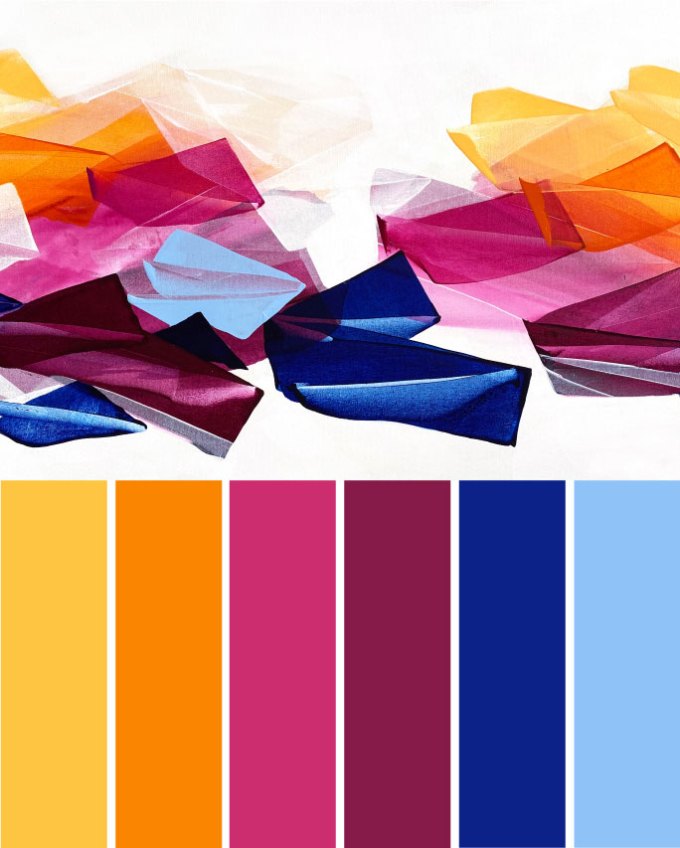
What You’ll Need:
Arylide Yellow Deep
Quinacridone Magenta
Ultramarine Blue Classic
Primary Cyan
Prussian Blue Hue
Titanium White
Carbon Black
Mixes from left to right:
- Arylide Yellow Deep, one drop of Quinacridone Magenta, a few drops of Titanium White
- Equal parts Arylide Yellow Deep and Quinacridone Magenta
- Quinacridone Magenta
- Quinacridone Magenta, a few drops of Carbon Black
- Ultramarine Blue Classic, a few drops of Primary Cyan and Prussian Blue Hue, a drop of Carbon Black
- Above mixed blue with Titanium White
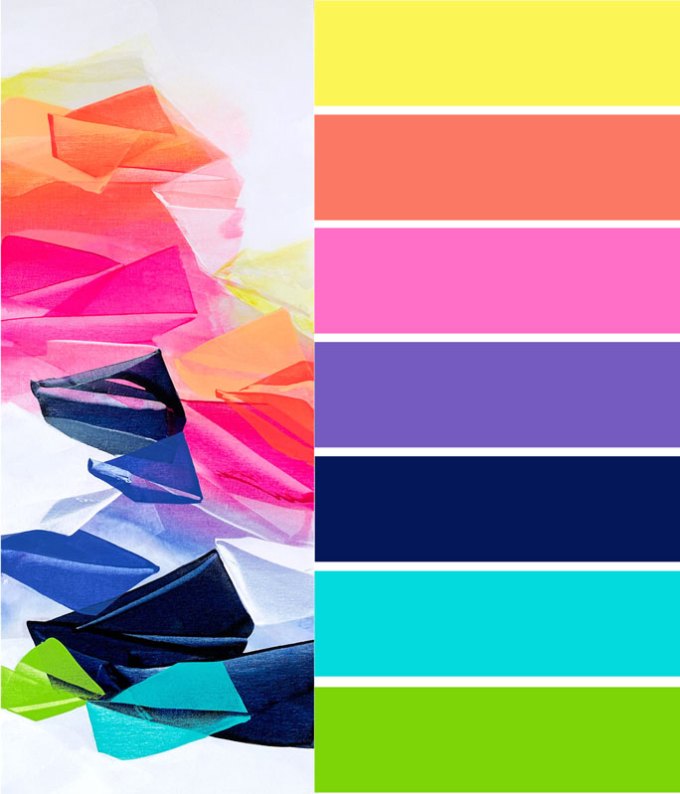
What You’ll Need:
Fluorescent Yellow, Orange & Pink
Cadmium Yellow
Quinacridone Magenta
Prussian Blue Hue
Teal
Vivid Lime Green (Liquitex Acrylic Gouache)
Mixes from top to bottom:
- Fluorescent Yellow, a few drops Cadmium Yellow, a few drops Titanium White
- Fluorescent Orange, Titanium White
- Fluorescent Pink
- Equal parts Quinacridone Magenta, Prussian Blue Hue, Titanium White
- Prussian Blue Hue, a few drops Carbon Black
- Teal, a few drops Titanium White
- Vivid Lime Green
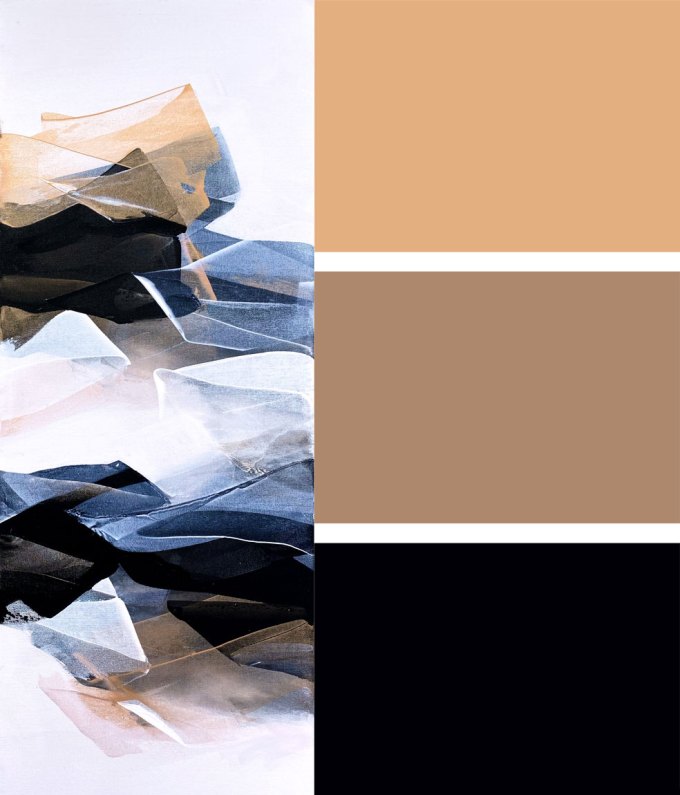
What You'll Need
Iridescent Gold Deep
Carbon Black
Titanium White
Mixes from top to bottom:
- Iridescent Gold Deep, a few drops of Titanium White
- Iridescent Gold Deep, a few drops Carbon Black
- Carbon Black
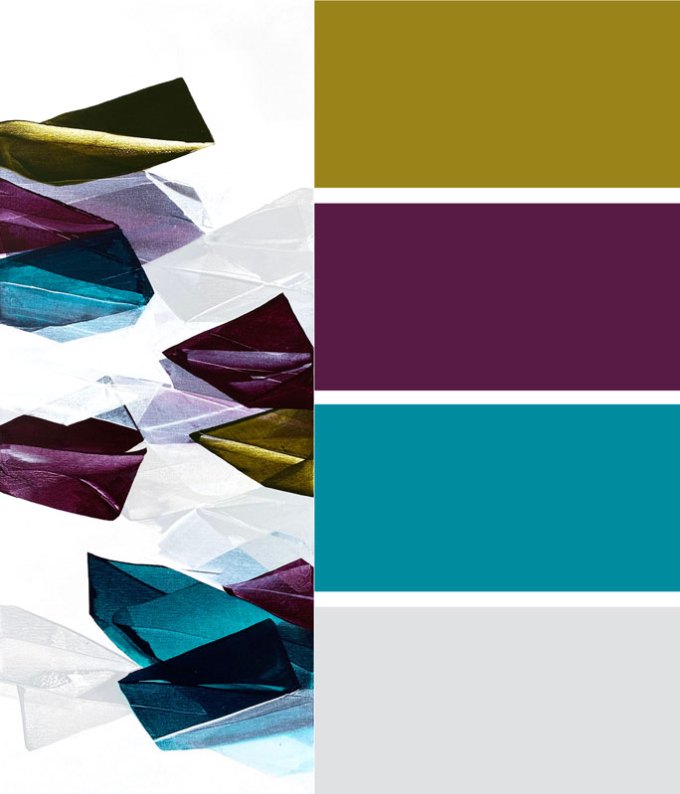
What You'll Need
Arylide Yellow
Green Gold
Phthalo Turquoise
Prussian Blue Hue
Quinacridone Violet
Carbon Black
Titanium White
Mixes from top to bottom:
- Green Gold, a few drops Arylide Yellow, a few drops of Carbon Black
- Quinacridone Violet, a few drops of Carbon Black
- Phthalo Turquoise, a few drops Prussian Blue Hue, a few drops Carbon Black
- Titanium White, a drop of Carbon Black
What You'll Need
Cobalt Teal
Iridescent Gold Deep
Carbon Black
Titanium White
Mixes from top to bottom:
- Carbon Black
- Cobalt Teal, a few drops of Carbon Black
- Iridescent Gold Deep, a few drops Titanium White
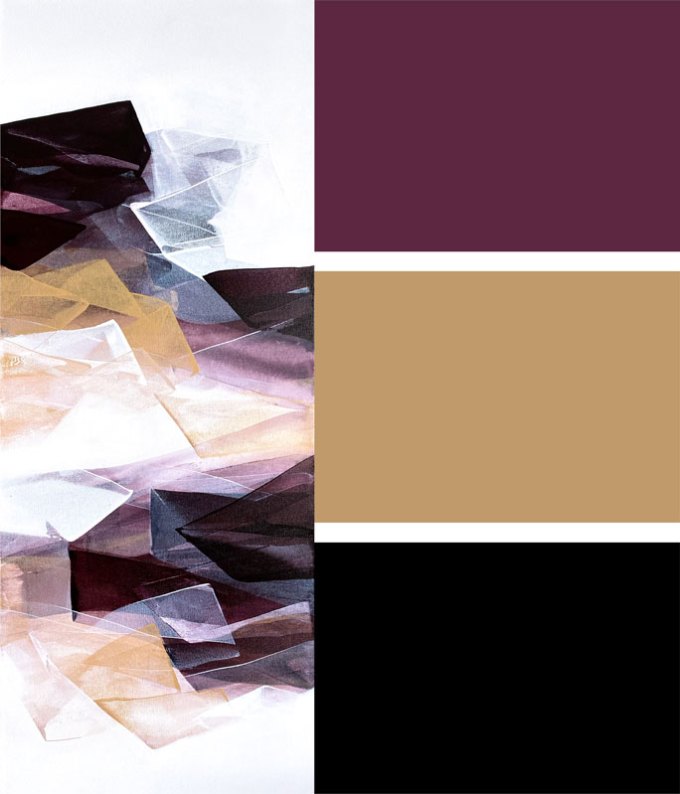
What You'll Need
Permanent Maroon
Iridescent Gold Deep
Carbon Black
Titanium White
Mixes from top to bottom:
- Permanent Maroon, a few drops Carbon Black
- Iridescent Gold Deep, Titanium White
- Carbon Black
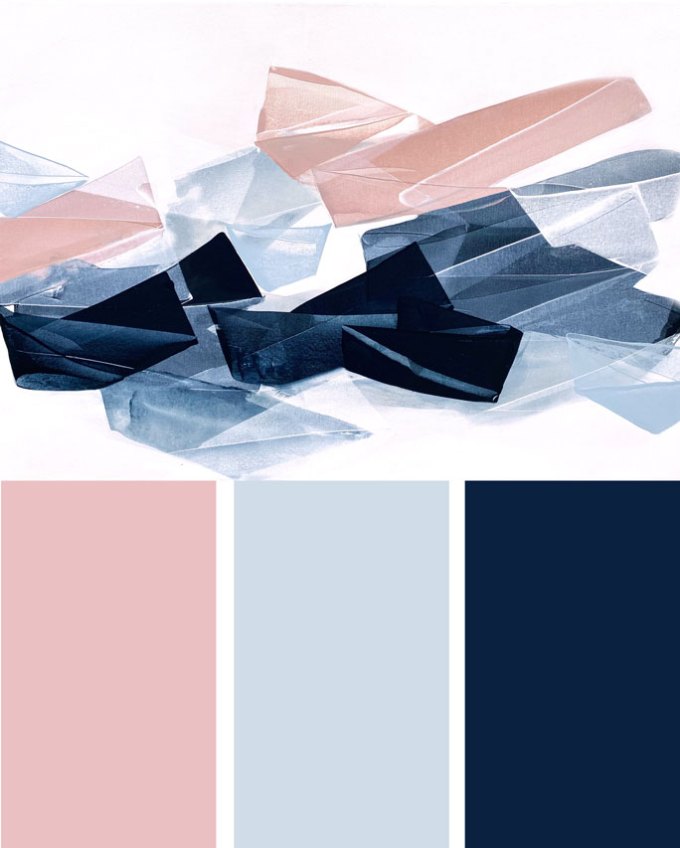
What You'll Need
Quinacridone Magenta
Arylide Yellow
Prussian Blue Hue
Carbon Black
Titanium White
Mixes from left to right:
- Quinacridone Magenta, a few drops Arylide Yellow, Titanium White
- Prussian Blue Hue, Titanium White
- Prussian Blue Hue, a few drops Carbon Black
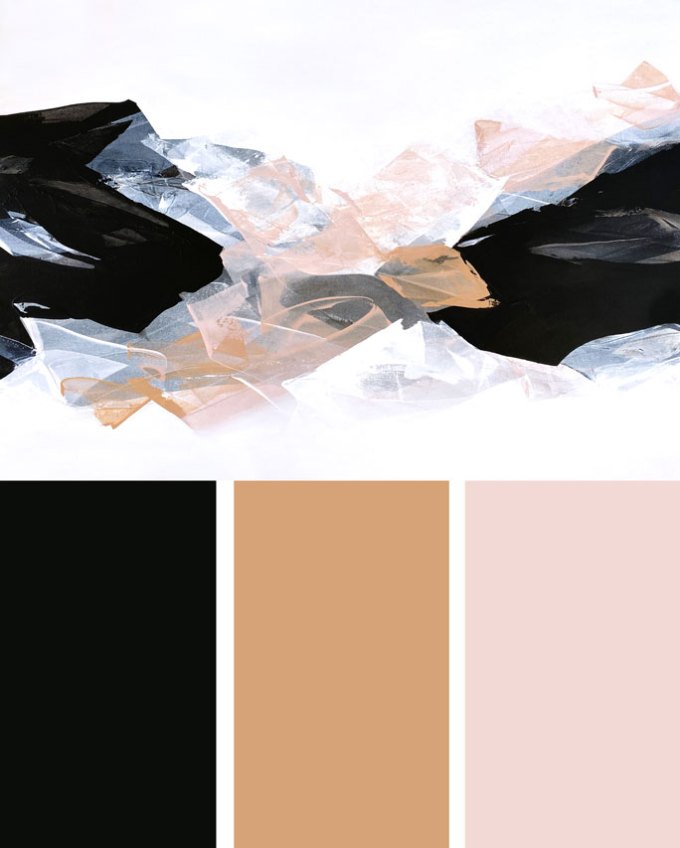
What You'll Need
Iridescent Gold Deep
Carbon Black
Titanium White
Mixes from left to right:
- Carbon Black
- Iridescent Gold Deep, a few drops of Titanium White
- Equal parts Iridescent Gold Deep, Titanium White
Pro Tip:
One of the best habits you can get into is making your own library of color swatches. Every time you use an off the shelf color or create a new color, create a swatch. Then, just like a recipe, make a note of the colors used on the back of your swatch. You'll be amazed by how many new abstract painting palettes you can create by playing around with your swatches.